Thailand plans to sign a memorandum of understanding on railway cooperation with China. Data on Thai exports, Vietnamese e-commerce, and Indonesian data centers also deserve attention.
This Week’s Top Story: Chinese Investment in Vietnam Expands into AI and Semiconductors as Vietnam Pushes High-Tech Cooperation
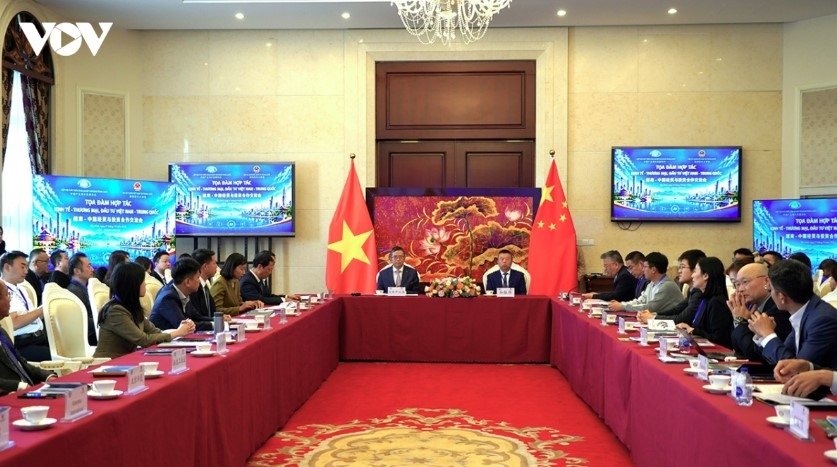
What happened. On October 27, the Vietnamese Embassy in China and the China Overseas Industrial Development Association (COIDA) hosted a trade and investment cooperation roundtable in Beijing. Vietnamese Ambassador to China Pham Thanh Binh and COIDA President He Zhenwei attended, alongside more than 100 in-person participants and nearly 20 Vietnamese representatives who joined online [2]. According to the Global Times, participants said Chinese investment in Vietnam is expanding from traditional manufacturing into emerging sectors such as artificial intelligence, the digital economy, and semiconductors, while Vietnamese businesses are seeking closer cooperation with Chinese companies on advanced technologies [1]. The Vietnamese ambassador welcomed expanded Chinese investment in Vietnam, specifically highlighting digital technology, AI, semiconductors, smart manufacturing, new energy, green industries, and modern industrial parks [2]. Citing Vietnamese data, the report stated that newly registered Chinese investment capital in Vietnam reached $2.27 billion in the first nine months of 2026 [1]. Participants also proposed establishing a regular liaison mechanism between COIDA and the Vietnamese Embassy in China to advance specific cooperation projects between businesses from the two countries [2].
Background. China remains Vietnam’s largest trading partner: according to Vietnam Customs, bilateral trade totaled approximately $256.5 billion in 2025, up nearly 25% year over year [2], and exceeded $253 billion in the first nine months of 2026 [1]. Chinese investment already has a strong presence in Vietnam’s industrial parks, with Chinese manufacturers bringing upstream and downstream suppliers along with them [1]. Vietnam–China supply chain cooperation was also a theme at a seminar held alongside the Autumn Economic Forum (AEF 2026) in Ho Chi Minh City on October 29. Vietnamese speakers cited a 2025 bilateral trade figure of $256.4 billion, slightly different from the customs figure above [3].
Implications. For Chinese manufacturers that have already established factories in Vietnam, this signals a shift in Vietnam’s policy focus from “absorbing production capacity” to “attracting technology.” New projects in areas such as AI, semiconductors, and smart manufacturing are more likely to attract attention from local authorities. For logistics and supply chain service providers, representatives of Chinese businesses operating in Vietnam said at the seminar that streamlining procedures and speeding up customs clearance would help reduce logistics costs, while advancing ESG practices is also necessary to align with international standards [3]. Whether these requests translate into measures that facilitate customs clearance is worth monitoring. In our view, the competitive picture is more complex: Vietnam is courting investment from multiple countries in high-tech sectors, and Chinese investors’ first-mover advantages in electronics and new energy supply chains may not automatically carry over into new areas.
What remains uncertain. Second, statements at the roundtable about AI and semiconductor cooperation largely outlined priorities and intentions; no specific signed projects or investment amounts were announced this week. Third, the liaison mechanism is currently only a proposal [2], and whether it will be established and how it will operate remain to be confirmed.
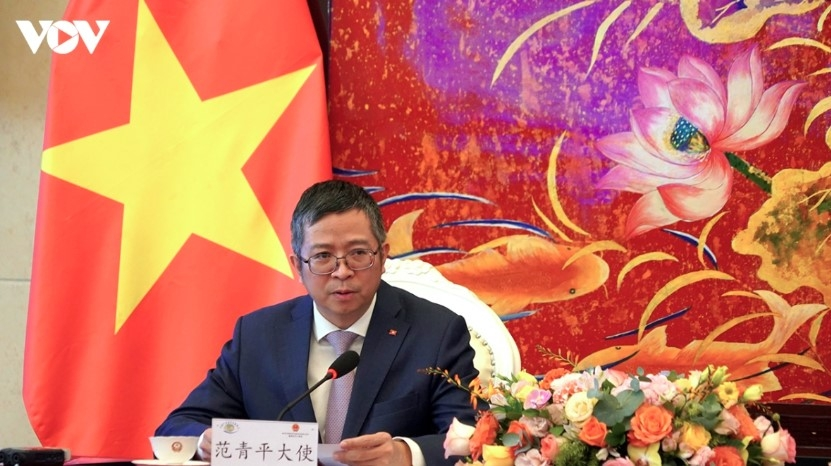
Image: Vietnamese Ambassador to China Pham Thanh Binh addresses the event (Source: VOV.VN (Voice of Vietnam))
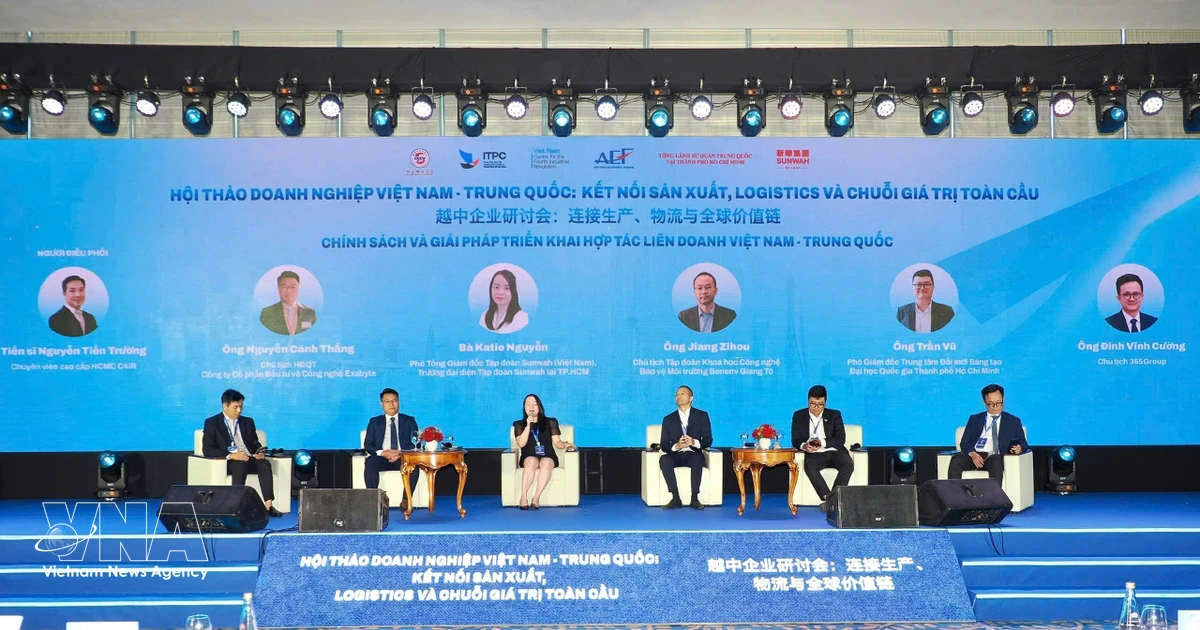
Image: Delegates discuss potential Vietnam-China cooperation in supply chains at the seminar. (Photo: VNA) (Source: Vietnam+ (VietnamPlus) / VNA)
Top Stories
Ho Chi Minh City Unveils 12 Projects, Led by Can Gio International Transshipment Port
On October 28, Ho Chi Minh City announced 12 projects that had received investment policy approval or investment registration certificates at the Autumn Economic Forum, with total investment exceeding VND 337.22 trillion (approximately US$13.58 billion) [4]. The largest is Can Gio International Transshipment Port, with an investment of VND 128.8 trillion (approximately US$4.92 billion) and a footprint of 571 hectares [4]. Jointly developed by Vietnam Maritime Corporation, Saigon Port Joint Stock Company, and TIL, the port is expected to handle 4.8 million TEUs by 2030 and 16.9 million TEUs by 2047 [4]. Singapore-based Tokgistic's Swift Logistics project represents an investment of US$987.4 million and is expected to begin operations by the end of 2026 [4]. Data presented at the seminar showed that ports in the Ho Chi Minh City area handle 65%–70% of Vietnam's container throughput, or approximately 18 million TEUs annually; the Cai Mep–Thi Vai port complex can accommodate 21,000-TEU vessels, with direct services to the United States and Europe [3]. Why it matters: Expanding ports and logistics parks directly affects export lead times and freight costs for factories in Vietnam. Manufacturers and freight forwarders choosing locations in southern Vietnam can use these developments to reassess their warehousing and shipping route networks.
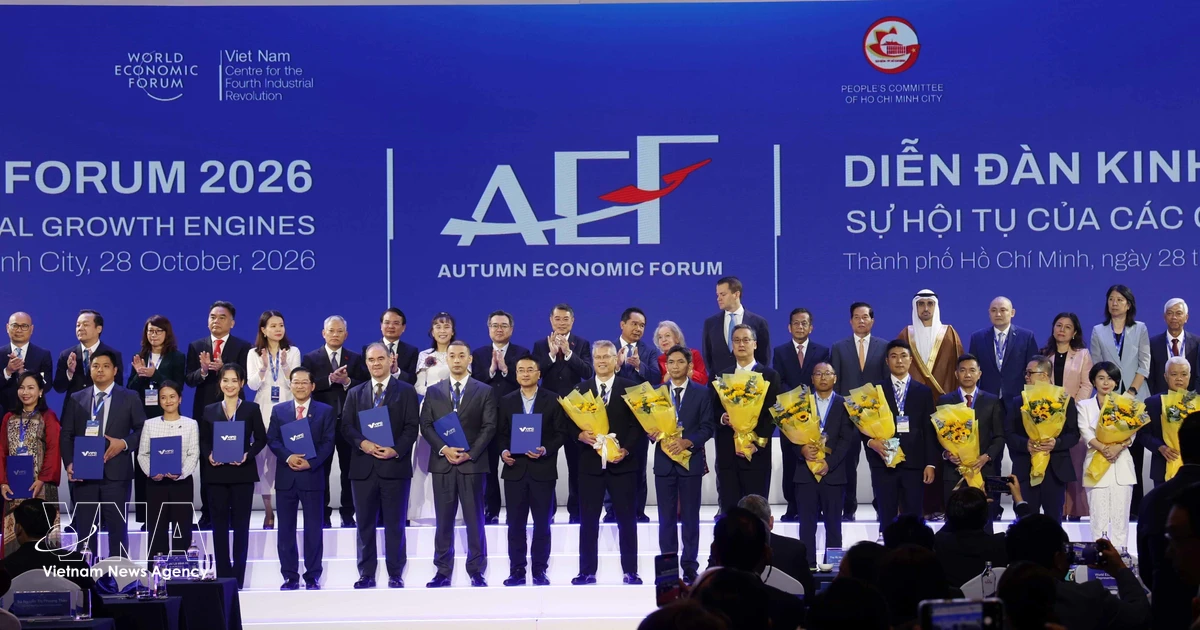
Photo: Government and Ho Chi Minh City leaders, along with delegates attending AEF 2026, pose for a group photo with members of the Vietnam International Finance Centre in Ho Chi Minh City and investors (Photo: VNA) (Source: Vietnam+ (VietnamPlus) / VNA)
Thailand Plans to Sign Rail Cooperation Memorandum with China’s National Railway Administration in Q4
Thailand’s Ministry of Transport plans to sign a memorandum of understanding with China’s National Railway Administration in the fourth quarter of 2026, establishing a framework for railway development cooperation across seven areas [5]. The framework covers infrastructure, regulation, industry development, and workforce skills [5]. The memorandum will be valid for three years and may be renewed for successive two-year terms [5]. Thailand’s Ministry of Transport expects the agreement to help the country draw more extensively on China’s knowledge and experience in developing international rail networks [5]. Note that this remains a plan; a specific signing date has not yet been announced. Why it matters: Chinese companies in railway equipment, engineering and construction contracting, and operations training can watch for subsequent lists of cooperation projects. For manufacturers that rely on cross-border land transportation, progress on rail connectivity will affect logistics costs between China and Southeast Asia.
Photo: Image accompanying a report on Thailand’s Ministry of Transport planning to sign a rail cooperation memorandum with China (Source: The Nation (Thailand))
Thailand’s September Exports Hit a Monthly Record as Imports Grow Even Faster
Thailand’s exports totaled $38.4389 billion in September, approximately 1.25 trillion baht, marking the 27th consecutive month of growth [6]. Exports rose 24% year over year to an all-time monthly high [7]. Excluding oil-related products, gold, and military goods, September exports grew 28.2% year over year [6]. Imports during the same period reached a record $44.2956 billion [6]. Based on these figures, imports exceeded exports by approximately $5.86 billion for the month. Thailand’s Trade Policy and Strategy Office projects export growth of 15%–16% in 2026, with 19% still within reach [6]. Why it matters: Strong growth in both exports and imports points to robust factory production and imports of raw materials and equipment in Thailand. Chinese companies setting up factories in Thailand or providing supply chain support should monitor changes in orders and import costs.
Image: Illustration accompanying coverage of Thailand’s September trade data (Source: The Nation (Thailand))
Vietnam E-Commerce and Indonesian Data Centers: Two Sets of Digital Economy Figures
Vietnam’s four major e-commerce platforms—Shopee, TikTok Shop, Lazada, and Tiki—recorded total gross merchandise value (GMV) of VND 4,117 trillion in the first nine months of 2026, up 22% year over year [7]. In Indonesia, operational data center capacity reached 468 megawatts in the first half of 2026, with nearly another 2 gigawatts under construction or in planning [7]. Batam currently has 70 megawatts of capacity, with publicly announced plans to add 747 megawatts over the coming years, reflecting investment driven by Southeast Asia’s demand for AI and cloud computing [7]. Why it matters: Vietnam’s e-commerce market continues to expand, creating room for growth for Chinese brands and supply chain companies serving Vietnamese consumers. Indonesia’s data center construction offers order opportunities for suppliers of servers, power equipment, cooling systems, and engineering services.
Key Figures at a Glance
- $2.27 billion: Newly registered Chinese investment capital in Vietnam in the first nine months of 2026 [1]
- Approximately $13.58 billion: Total investment in 12 projects announced by Ho Chi Minh City on October 28 [4]
- $38.4389 billion: Thailand’s September exports, marking the 27th consecutive month of growth [6]
- 468 megawatts: Indonesia’s operational data center capacity in the first half of 2026 [7]
- 100 million metric tons: Cumulative crude oil transported through the Myanmar–China pipeline since commercial operations began in 2017 [8]
News Briefs
- Myanmar–China Crude Oil Pipeline: According to the Chinese pipeline operator, cumulative crude oil transported through the pipeline has exceeded 100 million metric tons since commercial operations began in 2017 [8]
- Thailand: The cabinet approved a household solar subsidy program worth THB 50 billion (approximately $1.48 billion), a development worth watching for solar module and energy storage suppliers [8]
- Laos: The country will graduate from least developed country status on November 24, with some duty-free preferences ending as a result [7]
- ASEAN Defence Ministers’ Meeting-Plus: China said the Philippines had created multiple obstacles and sent only the defense attaché from its embassy in Manila to attend; the Philippine defense secretary said this was China’s position, not ASEAN’s [9]
- Haoyue Care: Revenue for the first nine months approached RMB 3 billion, up 8% year over year. The company has already established production capacity in Thailand, and its Tanzania factory is expected to begin production by the end of 2026 [10]
Editor’s Take
Several developments this week point to the same shift: Southeast Asian countries’ expectations of Chinese investment are moving from “building factories and bringing orders” toward “bringing technology and filling infrastructure gaps.” In our view, for executives at Chinese companies, the window for simply relocating production capacity is narrowing. Whether a project can create lasting local value through technology, supply chains, or infrastructure will increasingly influence the policy support it receives. Meanwhile, the Philippine peso’s record low and China–Philippines friction at the ASEAN defense ministers’ meeting remind businesses that exchange rates and geopolitical relations remain variables they cannot afford to overlook when planning their regional operations.
What to Watch Next
- November 24: Laos formally graduates from least developed country status, with some duty-free preferences ending. Companies manufacturing in and exporting from Laos should assess the impact of tariff changes in advance [7]
References
- Chinese investment in Vietnam expands into AI, other high-tech sectors, as businesses eye deeper cooperation — Global Times, accessed on 2026-10-30
- Roundtable seeks to boost high-tech investment ties between Vietnam and China — VOV.VN (Voice of Vietnam), accessed on 2026-10-30
- AEF 2026: Vietnam, China step up supply chain cooperation — Vietnam+ (VietnamPlus) / VNA, accessed on 2026-10-30
- Ho Chi Minh City unveils 12 investment projects worth over 13 billion USD — Vietnam+ (VietnamPlus) / VNA, accessed on 2026-10-30
- Transport ministry plans China rail pact covering 7 areas in Q4 2026 — The Nation (Thailand), accessed on 2026-10-30
- Thai trade gap hits US$5.86bn in September as imports surge — The Nation (Thailand), accessed on 2026-10-30
- ASEAN Business and Finance / ASEAN News Brief: October 27, 2026 — Central News Agency (CNA), accessed on 2026-10-30
- ASEAN Business and Finance / ASEAN News Brief: October 28, 2026 — Central News Agency (CNA), accessed on 2026-10-30
- China says Philippines 'erected obstacles' to Asean attendance — Malay Mail, accessed on 2026-10-30
- Jinhua entrepreneur sells diapers, bringing in 3 billion in nine months — 21st Century Business Review / 21 Finance, accessed on 2026-10-30