
Vietnam's most closely watched figure this week was foreign trade: goods imports and exports surpassed $1 trillion for the first time in the first 10 months, while October alone posted a $6.8 billion surplus. Meanwhile, rising chip prices caused a structural deficit in the electronics industry. Ho Chi Minh City used the Autumn Economic Forum to unveil a $13 billion project list and held dedicated discussions with Chinese-invested companies on supply chain cooperation. The Vietnamese dong remained broadly stable against the U.S. dollar.
This Week's Top Story: Foreign Trade Tops $1 Trillion in the First 10 Months, with a Surplus in October
Exports totaled approximately $499 billion in the first 10 months, up 27.4%. October recorded a trade surplus of $6.8 billion, the second consecutive monthly surplus, narrowing the cumulative deficit for the first 10 months to approximately $12.7 billion [1]. According to figures compiled as of October 29 by the customs authority under the Ministry of Finance, exports approached $494 billion and imports nearly $508 billion. Import growth was close to 38%, significantly outpacing exports [2].
For context, Vietnam's government set a full-year foreign trade growth target of just 15%–16% at the start of the year, while customs authorities now expect annual growth to exceed 25% [2]. Growth is heavily dependent on foreign-invested enterprises: their imports and exports totaled $778 billion in the first 10 months, accounting for nearly 78% of the national total and rising 37% year over year. Domestic enterprises recorded approximately $223 billion, up 16% [2].
In terms of implications, for Chinese companies operating factories in Vietnam, rapid import growth signals continued strong demand for upstream raw materials, components, and equipment. China and the United States are Vietnam's two largest trading partners [2]. For export-oriented factories, export growth is primarily driven by electronics and machinery, with foreign-invested enterprises leading the way and orders highly concentrated. For domestic Vietnamese enterprises, growth is only about half that of foreign-invested firms, leaving the pattern of strong foreign-invested businesses and weaker domestic businesses unchanged.
What remains uncertain: whether October's surplus can continue through year-end depends on whether prices for imports such as chips fall and on the pace of year-end inventory buildup. Figures from the foreign trade authority and customs remain estimates; final data will have to await the statistics authority's monthly report. In addition, the reports named only China, the United States, the EU, South Korea, and ASEAN as major markets, all showing positive growth, without publishing country-by-country values [1]. The specific trajectory of exports to the United States will require further data.
Key News
Electronics Exports Surge, but Rising Chip Prices Drive a Roughly $20 Billion Deficit
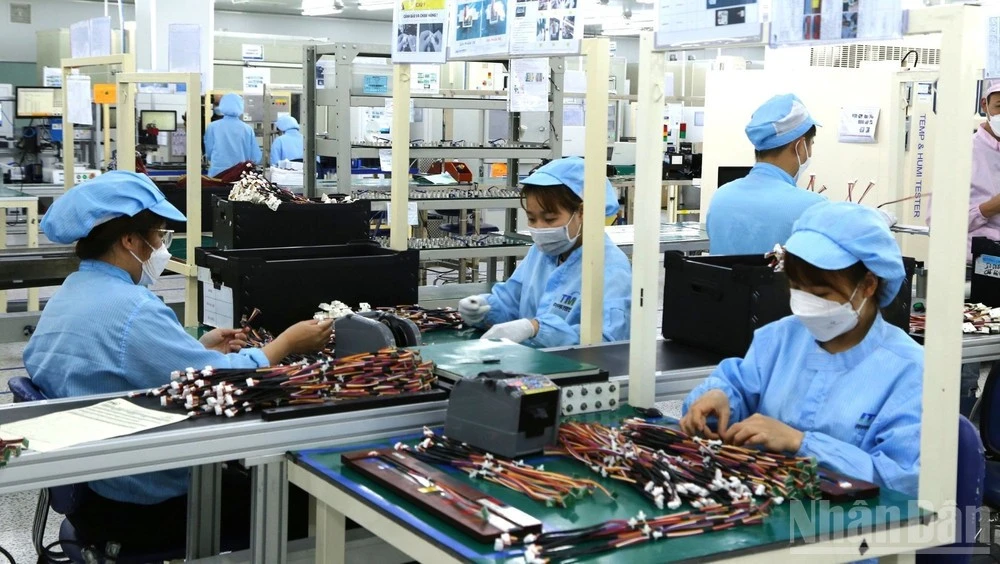
Vietnam's exports of computers, electronic products, and components reached $135.3 billion in the first 10 months, up 65% year over year, partly driven by global demand for AI equipment and data centers. However, a surplus of approximately $45.67 billion in phones and components was not enough to offset substantial imports in the computer and electronics category: the two categories combined still recorded a deficit of roughly $20 billion. According to customs data, as of October 15, combined exports in the two categories totaled $189.65 billion, accounting for approximately 40% of total exports, while imports reached $209.7 billion. The report noted that prices for some chips had risen by 300%–500%, driving up import values even without a proportional increase in import volumes [3].
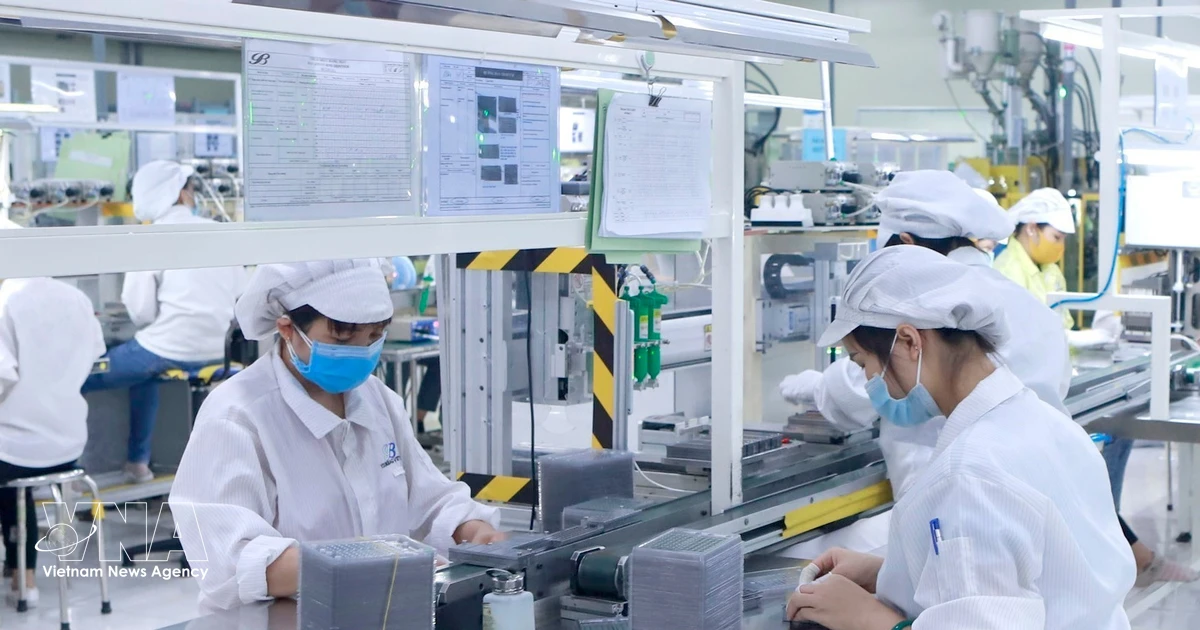
Photo: Producing electronic components at Star Engineers Vietnam Co., Ltd. in Binh Xuyen I Industrial Park, Phu Tho province (Photo: VNA) (Source: Vietnam+ (VNA))
Ho Chi Minh City Autumn Economic Forum: 12 Projects Target $13 Billion in Funding
According to an October 30 report by the Vietnam News Agency, the four-day Autumn Economic Forum 2026 (AEF 2026) attracted more than 1,500 participants from 60 countries and territories, with over 250 guests taking part in more than 20 panel discussions covering institutional frameworks, finance, artificial intelligence, strategic technologies, advanced manufacturing, and urban governance. At the forum, Ho Chi Minh City unveiled 12 major investment projects seeking a combined $13 billion in funding across ports, logistics, urban development, industrial manufacturing, and high technology. The Vietnam International Financial Center in Ho Chi Minh City (VIFC-HCM) also announced its first 10 official members. Prime Minister Le Minh Hung addressed the high-level plenary session on October 28 [6].
Why it matters: Ports, logistics, and high-tech manufacturing have traditionally been areas of strength for Chinese companies in Vietnam. This project list can serve as a starting point for identifying construction contracting, equipment supply, and joint venture opportunities. Progress in establishing the international financial center also has implications for future financing and settlement arrangements in Vietnam.
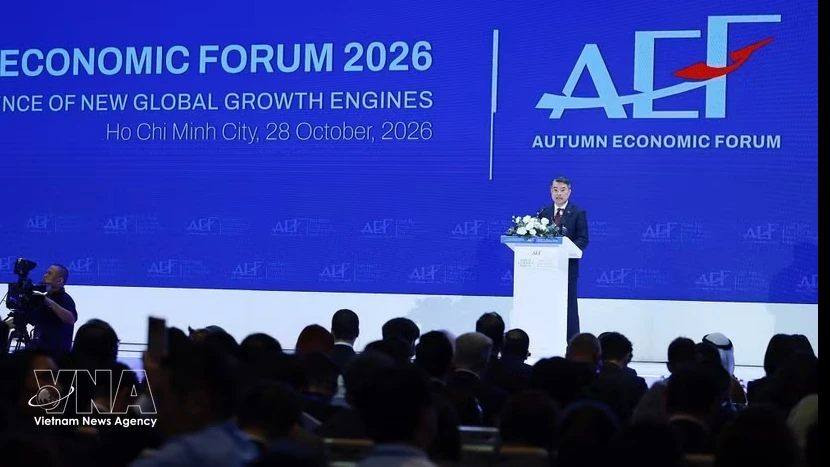
Photo: Prime Minister Le Minh Hung delivers a speech at the high-level plenary session of the Autumn Economic Forum 2026 on October 28. (Photo: VNA) (Source: Vietnam+ (VNA))
Chinese and Vietnamese Businesses Connect Manufacturing and Logistics Supply Chains in Ho Chi Minh City
On October 29, as a side event of AEF 2026, the Ho Chi Minh City Center for the Fourth Industrial Revolution, the Chinese Consulate General in Ho Chi Minh City, and the Ho Chi Minh City branch of the Chinese Business Association in Vietnam jointly hosted a seminar themed “Connecting Manufacturing, Logistics and Global Value Chains.” Vietnamese speakers noted that bilateral trade between China and Vietnam reached $256.4 billion in 2025. With their complementary economies, businesses in both countries have opportunities to participate more deeply in regional and global production networks. Ho Chi Minh City and nearby ports handle 65%–70% of the country’s container throughput, equivalent to approximately 18 million TEUs annually. The Cai Mep–Thi Vai deepwater port complex can accommodate 21,000-TEU container ships and offers direct routes to the United States and Europe.
Why it matters: For Chinese businesses planning factories or warehouses in southern Vietnam, deepwater ports’ ability to offer direct shipping to the United States and Europe is a key determinant of export logistics costs. Direct involvement by the Chinese consulate and business association also points to the potential for more China–Vietnam cooperation projects in areas such as cold chain logistics and smart ports of entry.

Image: Delegates discuss potential Vietnam-China cooperation in supply chains at the seminar. (Photo: VNA) (Source: Vietnam+ (VNA))
Agricultural, Forestry and Fishery Exports Reach $62.89 Billion in First 10 Months; Deputy Prime Minister Calls for Trading Exchanges
On October 30, Vietnamese Deputy Prime Minister Ho Quoc Dung chaired a meeting in Hanoi, calling for production to align closely with market demand and for the establishment of agricultural and fishery product exchanges. The Ministry of Agriculture and Environment and the Ministry of Industry and Trade were tasked with leading the development of proposals. According to figures presented at the meeting, agricultural, forestry and fishery exports totaled approximately $62.89 billion in the first 10 months, up 7.8% year over year. Imports reached $44.28 billion, up 9.2%, resulting in a trade surplus of approximately $18.6 billion. The sector is on track to meet its full-year growth target of 4%, with fourth-quarter growth projected at 4.3%–4.4%. Coffee export volume rose 18.1%, but export value fell 5.4%, while rice export volume and value declined 5.7% and 10.8%, respectively [8].
Why it matters: With prices for major agricultural products weakening and trading exchanges being planned, Chinese agricultural importers, food processors and cold chain logistics providers need to monitor potential changes in how Vietnamese agricultural products are priced and traded.

Image: Exports of agricultural, forestry and fishery products are estimated at 62.89 billion USD in the first 10 months of 2026, up 7.8% year-on-year. (Photo: VNA) (Source: Vietnam+ (VNA))
Cross-Border E-Commerce Still Accounts for a Small Share of Exports as Authorities Push to Scale Up
According to an October 30 report by Vietnam's official media, cross-border e-commerce exports accounted for just about 0.48% of Vietnam's total exports in 2025, with limited scale remaining the biggest constraint. Vietnam has signed 18 free trade agreements covering more than 65 markets. Both the Ministry of Industry and Trade's 2026–2030 work agenda and the national master plan for e-commerce development identify cross-border e-commerce as a new export channel [9].
Why it matters: Vietnam's government wants domestic brands to reach overseas markets directly through e-commerce platforms. This creates opportunities for Chinese cross-border e-commerce service providers, logistics companies, and payment firms to collaborate, while also putting Vietnamese sellers in direct competition with Chinese sellers in third-country markets.
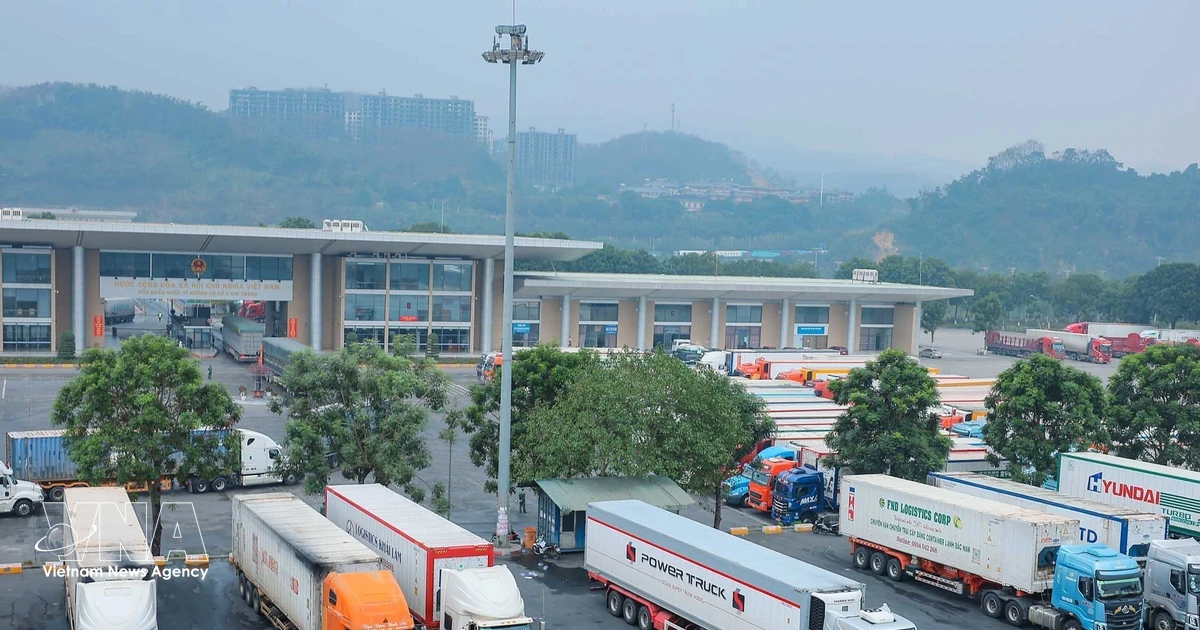
Image: A digital border gate platform is under pilot since August 2023 at Kim Thanh International Land Border Gate No. 2 (Photo: VNA) (Source: Vietnam+ (VNA))
By the Numbers
- $1.0106 trillion: Vietnam's total merchandise imports and exports in the first 10 months, up 32.3% year-on-year [1]
- $6.8 billion: Vietnam's merchandise trade surplus in October, marking the second consecutive month of surplus [1]
- VND 25,637 per USD: The State Bank of Vietnam's central exchange rate on October 30, up VND 10 from 25,627 on October 26, indicating a slight weakening of the dong by about 0.04% [4][5]
- VND 26,020 per USD: Vietcombank's USD selling rate on October 30, down VND 10 from 26,030 on October 26 [4][5]
- 78%: Foreign-invested enterprises' share of Vietnam's total imports and exports, worth $778 billion [2]
News Briefs
- Exchange Rates: The State Bank of Vietnam maintained its ±5% trading band. On October 30, commercial banks’ USD exchange-rate ceiling was VND 26,919 and the floor was VND 24,355, with banks generally lowering their opening quotes [4]
- Exchange Rates: On Monday, October 26, the central exchange rate was unchanged from the previous weekend, while commercial banks’ opening quotes were down VND 10 from October 23 [5]
- China–Vietnam Border Trade: The 2026 China–Vietnam International Trade Fair opened in Tuyen Quang Province on October 24, featuring 300 booths, including 50 from China. The event ran through October 30 [10]
- Trade Outlook: Vietnam Customs expects full-year import and export growth to exceed 25% in 2026, well above the government’s target of 15%–16% [2]
- Energy Investment: During AEF 2026, REE Energy Finance pledged to mobilize $200 million for renewable energy projects [6]
- Port Logistics: Ho Chi Minh City said it would prioritize development of the Cai Mep–Thi Vai deepwater port complex to strengthen direct shipping connections to Europe and the United States [7]
Editor’s Take
Notably, several sets of data this week point to the same pattern: Vietnam’s foreign trade is expanding rapidly in volume, but its underlying strength remains heavily dependent on foreign investment and the electronics industry. Foreign-invested enterprises account for nearly 80% of total imports and exports, while electronics make up 40% of exports. Rising chip prices have also pushed up import values, leaving Vietnam with a cumulative trade deficit this year—a rarity in recent years. In our view, this has two implications for Chinese businesses. First, demand in Vietnam remains strong for components, supporting services, and raw materials for electronics and machinery manufacturing, with supply chain relocation continuing to generate more orders. Second, Vietnam’s dependence on foreign investment and a single industry is deepening. Policy efforts to support domestic enterprises, agricultural commodity exchanges, and cross-border e-commerce could gradually reshape the local competitive landscape. Ho Chi Minh City’s release of a list of port logistics projects, alongside supply chain discussions with Chinese-invested companies, signals that Vietnam wants Chinese businesses to participate more deeply in infrastructure and logistics, rather than just assembly and manufacturing.
References
- Viet Nam's goods trade surpasses 1 trillion USD — Nhan Dan Online, accessed on 2026-11-01
- Vietnam's import-export turnover surpasses US$1 trillion — Sai Gon Giai Phong (SGGP), accessed on 2026-11-01
- Vietnam’s electronics industry faces trade deficit despite strong export growth — Vietnam+ (VNA), accessed on 2026-11-01
- Reference exchange rate down 7 VND on October 30 — Vietnam+ (VNA), accessed on 2026-11-01
- Reference exchange unchanged at week’s beginning — Vietnam+ (VNA), accessed on 2026-11-01
- AEF 2026 calls for action to unlock growth potential — Vietnam+ (VNA), accessed on 2026-11-01
- AEF 2026: Vietnam, China step up supply chain cooperation — Vietnam+ (VNA), accessed on 2026-11-01
- Deputy PM Ho Quoc Dung urges stronger market links, agro-seafood exchange establishment — Vietnam+ (VNA), accessed on 2026-11-01
- Cross-border e-commerce opens new export path for Vietnam — Vietnam+ (VNA), accessed on 2026-11-01
- Vietnam–China international trade fair opens in Tuyen Quang — Vietnam+ (VNA), accessed on 2026-11-01