
Thailand is where sellers should crunch the numbers this week: the three major platforms have agreed to roll back mandatory fees starting in December, but sales thresholds and registration requirements apply. Meanwhile, TikTok Shop Southeast Asia has revised three sets of rules covering major sales event eligibility, brand copy, and return shipments—all worth reviewing before 11.11.
This Week's Top Story: Shopee, Lazada, and TikTok Shop Roll Back Mandatory Fees in Thailand for Six Months
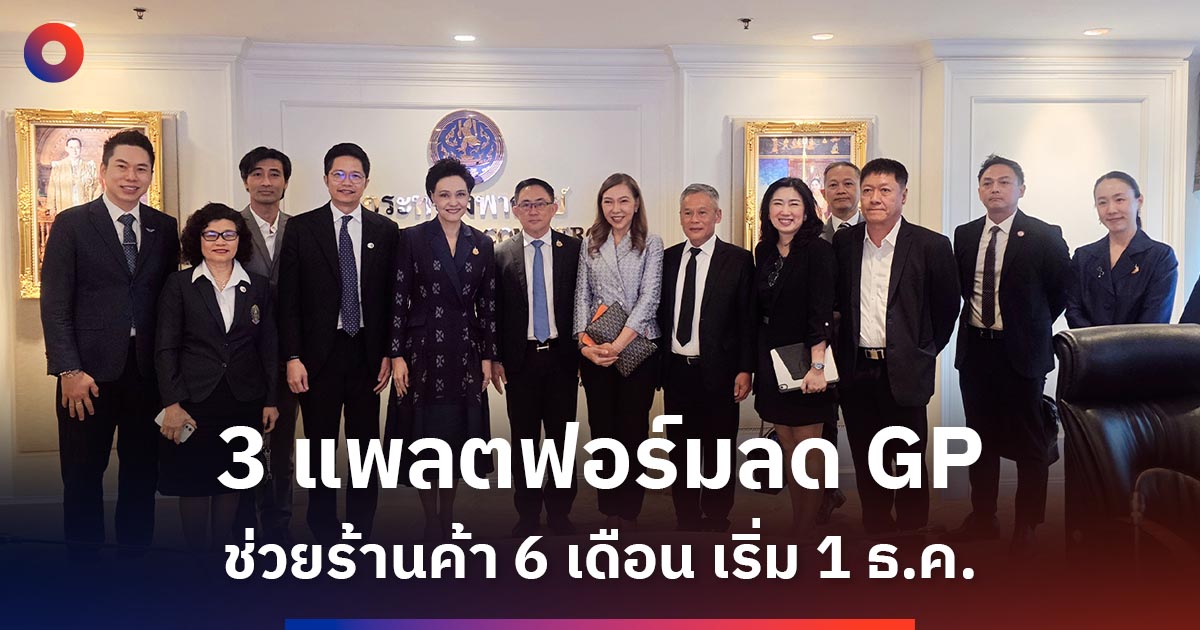
Thailand's Ministry of Commerce announced on October 28 that the three platforms had agreed to reduce mandatory fees to their early-2026 levels, effective December 1, 2026, through May 31, 2027 [1]. The fee ranges will change as follows: Shopee's will fall from 8.03–19.26% to 8.03–13.91%, a maximum reduction of 33.30%; TikTok Shop's will fall from 13.38–21.94% to 11.24–17.66%, a maximum reduction of 35%; and Lazada's will fall from 9.00–17.50% to 7.50–11.60%, a maximum reduction of 42.90% [2]. These mandatory fees, commonly known as GP, are the fees sellers must pay platforms after completing a sale.
The move follows repeated fee increases this year. Wattanasak Sur-iam, director-general of Thailand's Department of Internal Trade, said platform fees had risen three times since January 2026 [12]. Thailand's Trade Competition Commission had previously required a freeze on fee increases from August 27, 2026, through February 27, 2027 [1]. This rollback goes a step further than a freeze, with all three platforms lowering their rates at the same time.
For sellers, the savings won't come automatically. Annual sales must not exceed 1.8 million baht for individual sellers or 3.5 million baht for companies. The Ministry of Commerce estimates that about 1.2 million merchants will qualify, saving a combined 1.93 billion baht over six months [7]. Electronics are excluded from the fee relief [1]. Calculations by Thai media offer a reminder that additional ad spending could offset the savings: for a hypothetical 100-baht product, a drop in mandatory fees from 15 baht to 12 baht would increase the seller's proceeds by 3 baht [5]. According to INDEX News's calculation, the average savings would be about 1,608 baht per merchant [12].
Three points remain unresolved. First, none of the reports we reviewed mentioned cross-border sellers, and the eligibility criteria are framed around local registration in Thailand [1][6]. We believe China-based cross-border stores should not factor this fee relief into their budgets and should rely on platform notices for confirmation. Second, TikTok Shop's growth service fee for cross-border stores is a separate charge: 6.96% for electronics and 8.03% for other categories, capped at 199 baht per item. No reports currently indicate that it will also be adjusted [8]. Third, reports differ on the details of the eligible categories: Thai outlet Thansettakij lists FMCG, LIFESTYLE, FASHION, and OTOP [3], while Thairath reports that all categories except electronics are included [1]. What happens after the relief period ends also remains undecided; the Ministry of Commerce says it will revise the draft Platform Economy Act [4].
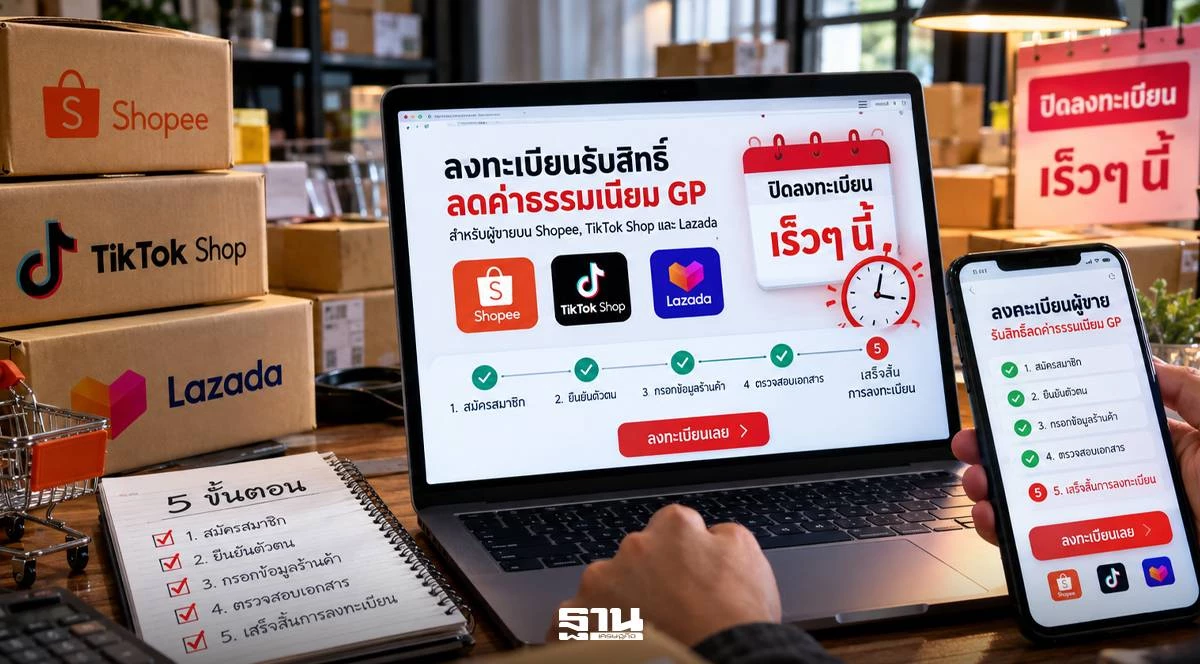
Image: Illustration accompanying Thansettakij's report on the registration process for platform fee reductions in Thailand (Source: Thansettakij)
Top Stories
TikTok Shop Tightens Eligibility for Major Sales Events in Southeast Asia
According to Kolvant, TikTok Shop updated its eligibility rules for major sales events in Southeast Asia on October 29. For unrated stores, the maximum dissatisfied order rate has been lowered from 3% to 1.5%, measured over a 30-day period, with calculation beginning only after 10 orders with negative reviews have accumulated [9]. Rated stores must have a logistics fulfillment score of at least 2.5; stores below that threshold cannot participate, even with a clean review record [9]. Risk or fraud flags are now a mandatory check, with only a pass or fail result [9]. We were unable to access the original official policy page; the information above is based on industry media reporting.
Why it matters: Eligibility for 11.11 and 12.12 campaigns is directly tied to these metrics. New stores and cross-border stores with low fulfillment scores face the biggest impact and should check their scores before applying.
TikTok Shop Adds Restricted Language Provisions to Southeast Asia Branded Product Rules
Also on October 29, TikTok Shop added a section on restricted language to its Southeast Asia branded product rules, targeting unauthorized brand claims [10]. Under the new rules, brands for which authorization cannot be verified will be grayed out in the brand field, while authorized options will carry a green Authorized label [10]. Product titles must start with the primary brand, followed by the model; other brands may be mentioned only with permission [10]. At least one image must display the brand, and brand logos must not be obscured by stickers, pieces of paper, pixelation, or tape [10].
Why it matters: Sellers listing broad catalogs of branded goods or accessories face the biggest impact. Adding brand keywords to titles to capture traffic or covering logos with stickers now explicitly crosses the line.
TikTok Shop Adds Requirement to Send Returned Items Back to Buyers in Southeast Asia Disputes
Kolvant reported on October 31 that a new section in the Southeast Asia after-sales policy requires sellers to send returned items back to buyers when instructed to do so during a dispute [11]. Sellers who fail to comply will lose the right to appeal the case, and any appeal submitted will not be approved [11]. The buyer's order will be refunded, and shipping costs will not be reimbursed even if the seller sends the item back later [11]. The report did not specify a standard deadline in hours.
Why it matters: Cross-border stores often keep returns in overseas or third-party warehouses, where support tickets can easily be overlooked. As disputes rise after major sales events, this requirement could directly result in financial losses and the loss of appeal rights.
By the Numbers
- THB 1.93 billion: Total estimated savings over six months, according to Thailand's Ministry of Commerce [7]
- About 1.2 million: Number of eligible Thai merchants [2]
- 42.90%: Maximum reduction on Lazada Thailand [2]
- 1.5%: Maximum dissatisfied order rate for unrated TikTok Shop stores to qualify for major sales events [9]
- 2.5 points: Minimum logistics fulfillment score for rated stores [9]
News Briefs
- Thailand’s Electronic Transactions Development Agency (ETDA): Released guidelines on total take rates, urging platforms to disclose all fees before sellers sign up for campaigns, but setting no fee caps [5].
- Thailand’s food delivery and ride-hailing platforms: The commerce minister said the next step would be to push for lower fees on these platforms; specific plans have not yet been announced [1].
What Sellers Should Do
This week’s changes point in the same direction: fees are easing, but eligibility requirements and fulfillment assessments are getting stricter. We recommend starting with three steps.
- Local stores in Thailand (with a Thai business entity and sales within the threshold): See the lead story. Confirm as soon as possible whether your entity has completed e-commerce registration. Registration opened on November 1, and review takes about 10 business days [3].
- Cross-border TikTok Shop stores signing up for major sales events in Southeast Asia: See the update on sales event eligibility. Before signing up, check your fulfillment score and order dissatisfaction rate in Seller Center. If your score is below 2.5, address fulfillment issues first [9].
- Broad-assortment sellers offering branded goods and accessories: See the updates on brand rules and returns. This week, remove terms such as “official” and “flagship” from product titles and main images in bulk [10], and assign someone to review return tickets daily [11].
What to Watch Next
- December 1, 2026: Thailand’s new fee rates take effect and remain in place through May 31, 2027 [1]
- February 27, 2027: Thailand’s fee-increase freeze ends [1]
References
- Three major e-commerce platforms agree to cut commission fees for six months starting December 1, 2026; delivery apps may be next — Thairath Online, accessed on 2026-11-02
- Thailand secures six-month fee cuts for SMEs on Shopee, Lazada and TikTok Shop — Pattaya Mail, accessed on 2026-11-02
- Five steps to register for commission fee reductions on major platforms Shopee, TikTok Shop and Lazada — Thansettakij, accessed on 2026-11-02
- Shopee, TikTok Shop and Lazada cut commission fees for six months starting December 1, 2026 — SPACEBAR, accessed on 2026-11-02
- How much profit do online sellers retain after commission fee cuts? A look at the real costs — SPACEBAR, accessed on 2026-11-02
- Lazada, Shopee and TikTok Cut Fees to Save Thai SMEs 1.93B Baht — RetailNews Asia, accessed on 2026-11-02
- TikTok Shop Thailand GP fees fall under ministry deal — Kolvant, accessed on 2026-11-02
- TikTok Shop Thailand growth service fee: 6.96% and 8.03% — Kolvant, accessed on 2026-11-02
- TikTok Shop SEA mega-sale eligibility rules tighten — Kolvant, accessed on 2026-11-02
- TikTok Shop SEA brand listing rules tighten wording — Kolvant, accessed on 2026-11-02
- TikTok Shop SEA returns to buyers: ship back or lose appeals — Kolvant, accessed on 2026-11-02
- Thailand rolls back e-commerce commission fees for six months; Lazada's maximum rate drops by 5.9 percentage points — INDEX News, accessed on 2026-11-02