
This compilation draws on the supplied materials, most of which were published between November 12 and 15, 2026. They cover computing capacity and chips, embodied AI, consumer applications, developer practices, and governance controversies. Because all of these materials have a source verification status of unchecked, the figures, company statements, and news headlines cited here should be treated as leads requiring further verification, not independently confirmed facts. In particular, headlines alone cannot support broader conclusions about market performance, product capabilities, project scale, or legal cases. Overall, what merits tracking is not any single model or new product, but whether AI capabilities can form a sustainable cycle connecting computing supply, real-world business operations, user needs, and governance mechanisms.
Computing Demand Spreads as Supply Chain Expansion Meets Constraints
This group of reports traces an expansion in computing capacity spanning chip manufacturing, packaging and testing, and server delivery. Coverage of SK hynix notes that the company is moving forward with investments in HBM4-related equipment. Investment plans, however, are not the same as new capacity entering production; construction and delivery progress still need to be monitored.[1]
A report from Anhui describes the expansion of regional computing clusters and states that the Wuhu data center cluster accounts for about 70% of the province’s AI computing capacity. This case illustrates how computing supply is extending into regional clusters and industrial development strategies. Capacity figures alone, however, do not reveal utilization rates or concrete business outcomes.[2]
The other side of the supply picture involves constraints on equipment and components. Reports on SMIC relay expectations of tight foundry capacity ahead and note that longer equipment delivery lead times could disrupt the execution of future capital spending plans. These are management’s expectations about industry and operating conditions, not definitive conclusions about supply and demand.[3][4]
Downstream developments show cloud providers and model developers increasing investment in custom ASICs, while server manufacturers are also discussing AI business growth and customer demand. Coverage of Foxconn also notes that key components remain in short supply, while Pegatron says shipment timing is affected by supplier deliveries and allocations. Taken together, demand signals do not necessarily translate into fulfilled orders or realized revenue. For procurement and technical teams, the more useful approach is to assess computing budgets, deployment options, and alternative supply arrangements against actual workloads.[5][6][7]

Photo: From left: Foxconn CFO Huang Decai, Chairman Liu Young-way, and spokesperson Wu Junyi. Photo by Lu Chengzhe (Source: Next Apple News)
The test for embodied AI shifts from demos to sustained operations
The test for embodied AI is shifting from “Can it complete a demo?” to “Can it keep running in real-world settings?” According to a republished China Business Journal report, AgiBot disclosed changes in the scale of robot deployment, operations and maintenance staffing ratios, and cumulative productive robot working hours at its Chimelong project. The report also noted that on-site interaction data was used for subsequent model training. Because this information comes from materials that this site has not independently verified, the figures should be treated as leads from company disclosures, not as standalone proof of the project's long-term stability or operational benefits.[8]
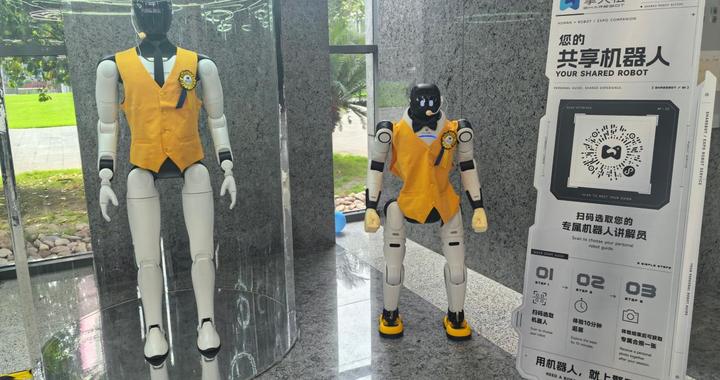
Image: Header image from the China Business Journal report on AgiBot's real-world robot operations (Source: China Business Journal (republished by Sina Finance))
Another development concerns model governance: Sina Tech reported that X Square's general-purpose embodied foundation model, GreatWall, had completed its regulatory filing, and described the safety assessments and testing conducted beforehand. The filing indicates progress through the relevant procedures, but it does not replace an evaluation of the model's performance on real-world tasks, its ability to handle unexpected situations, or its deployment costs. This report has likewise not been independently verified by this site.[9]
Industry discussions also extend to demand for computing power. Sina Finance's coverage of a conversation between Fei-Fei Li and Lisa Su presented robotics as a potential driver of future growth in computing demand and relayed forecasts for the physical AI market. These are the speakers' views and predictions, not market outcomes that have already materialized. A Huawei Cloud page, meanwhile, describes a platform for embodied AI data synthesis, model development, and simulation-based validation, but the page itself does not establish the platform's effectiveness in specific projects. None of these materials has been independently verified by this site.[10][11]
For readers focused on real-world deployment, what matters is not just robot counts or model advances, but whether systems can reliably complete tasks, handle unexpected situations, and continue delivering value with an acceptable maintenance burden. When comparing projects, first distinguish what company disclosures, market forecasts, regulatory filings, and evidence from actual operations can each establish. Then examine metrics such as task success rates, fault recovery, safety boundaries, and cost per productive operating hour, while checking how the data is defined and where the evaluations come from.[8][9][10]
AI enters more products and workflows, but adoption buzz is not proof of results
Materials covering consumers and developers illustrate several different paths for AI use: platforms are bringing AI products and services into shopping environments, phone assistants are attempting to operate apps on users' behalf, creative tools are targeting content generation, and independent developers are using models to build projects or modify devices. Reports stated that more than 50 million AI products were sold during JD.com's Singles' Day shopping event, while searches for AI Token on the platform increased more than thirteenfold. These figures reflect the interest and transaction signals described in the reports, but they do not establish that users will keep using these products over the long term or that the products are already generating consistent returns.[12]

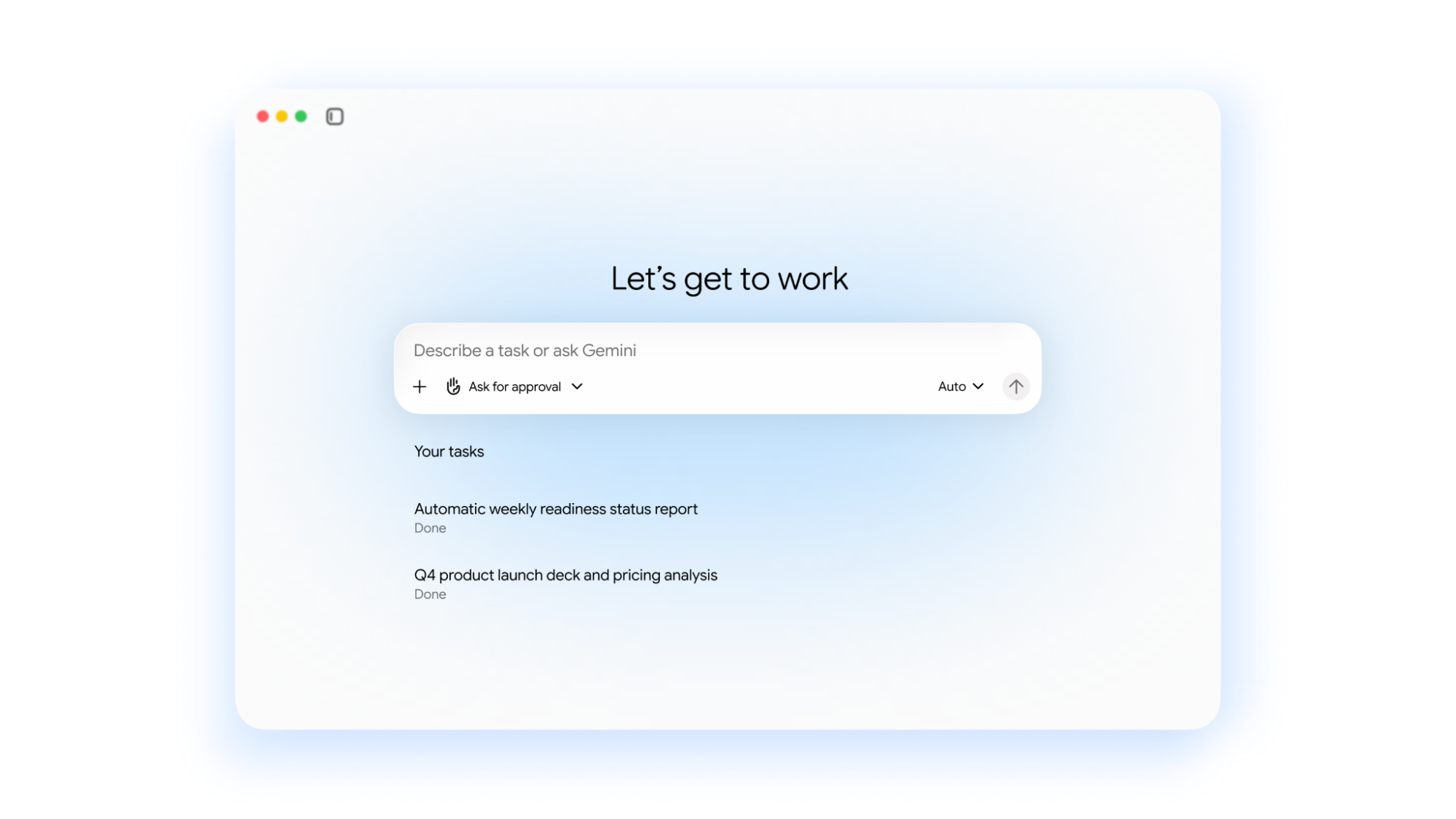
Image: An illustration accompanying ITHome's report on Google Gemini's task automation feature (Source: ITHome (ifeng.com))
Mobile automation takes AI beyond providing answers to performing actions on users' behalf. Citing a blog post, ITHome reported that Gemini's list of target apps relates to the stable release of Android 17 QPR2 and Android Canary. However, the report noted that Google had not yet publicly released the full list or responded to the findings. The scope of the list alone does not establish task success rates, the consistency of the user experience, or whether users are willing to grant permission for AI to act on their behalf.[13]
Examples from creative work and development show that models can contribute to music generation, lightweight game development, and smart home device modifications. However, project descriptions in news reports alone are not enough to assess the reliability, maintenance costs, or real-world performance of the finished products. For product teams, a more prudent approach is to treat adoption momentum as a demand signal that needs validation: choose a specific workflow for a small-scale pilot, and track completion time, human intervention, the consequences of errors, and ongoing costs. Where automated actions are involved, users should also retain confirmation, undo, and permission controls.[14][15][16]
Beyond Industry Signals, Growth Narratives Must Not Obscure Controversies and Governance Risks
According to ITHome (via ifeng.com's Dafenghao platform), seven people were sentenced in a case involving AI-generated pornographic images of Chinese animation characters for producing, reproducing, selling, and distributing obscene materials for profit. The report also stated that the judgments had taken legal effect. Because these materials have not yet been verified, the specific facts of the case and the legal wording should still be checked against the original report and authoritative sources. They should not be used to draw broader legal conclusions.[17]
Attitudes toward generative AI in the gaming industry are also divided. A GDC survey cited by ITHome found that 55% of respondents believed generative AI had a negative impact on the gaming industry, while another 35% viewed its impact as mixed. The materials provided do not elaborate on the survey sample, question design, or specific use cases, so these percentages cannot be taken as directly representative of the entire industry.[18]
In another report, ITHome stated that a test taker in South Korea admitted to using a miniature camera to photograph exam questions and send them to generative AI, then receiving answers on a phone. The materials also stated that the incident had drawn the attention of the relevant authorities. This account likewise remains unverified, and the available information is insufficient to establish the full sequence of events or determine responsibility. It nevertheless highlights the need for clear rules on AI use in high-stakes assessment settings such as exams, along with enforceable mechanisms to prevent violations and trace them after the fact.[19]
A Guancha.cn report published on Sina Finance stated that a Google executive demonstrated porting a Nintendo game to an Apple device with the help of Gemini 4, then deleted the related posts. The report noted that Nintendo's software terms of use restrict activities such as copying, modification, and reverse engineering. The materials did not provide verifiable technical details or a complete response, so the headline alone is not enough to establish infringement or assess the demonstration's results. For businesses and developers, a more prudent approach is to check content licenses and platform terms, establish clear processes for reviewing and tracing generated content, and use reproducible evidence to explain the limits of a product's capabilities.[20]
Editorial Perspective: Turning This Week's Signals into Testable Actions
These materials are better treated as a list of questions to validate than as definitive conclusions about trends. Reports indicate that computing capacity is expanding while supplies of chips and components remain tight. Companies' assessments of demand and future shipments still need to be checked against orders, deliveries, and funding conditions.[2][3][6][7]
Reporting on embodied AI offers operational insights, such as runtime and human-to-robot staffing ratios, but metrics from a single project are not enough on their own to demonstrate commercial maturity. The emergence of more AI features and services in consumer applications and the developer market does not necessarily mean users will keep using them, or that these features are already delivering reliable results in real-world workflows.[8][12][13]
Teams can start by piloting a high-frequency, low-risk workflow, documenting the current baseline, and defining conditions for human takeover and criteria for stopping the pilot. At the same time, they should assess model invocation, hardware, and maintenance costs, and prepare alternatives for critical dependencies. Launch reviews should also incorporate data permissions, access management, content moderation, and an appeals process for exceptional cases. Before using figures and company assessments from these materials to inform budgets or roadmaps, teams should verify the original disclosures and the definitions and methodologies behind the statistics.
References
- SK hynix Reportedly Accelerates Equipment Investment to Further Expand HBM4 Capacity — IT Home (ifeng.com Dafeng), accessed 2026-11-15
- How Anhui Is Turning Computing Power into Solutions Across Industries — Xinhuanet (republished by Sina Finance), accessed 2026-11-15
- SMIC's Zhao Haijun: Demand for AI Computing Power Outstrips Supply; Semiconductor Foundry Capacity Will Be Extremely Tight in 2027 — IT Home, accessed 2026-11-13
- SMIC Co-CEO Zhao Haijun: 2026 Revenue Expected to Exceed $12 Billion as Global Equipment Delivery Lead Times Lengthen — IT Home, accessed 2026-11-13
- Hon Hai: Major Cloud Service Providers and AI Model Developers Are Increasing Investment in Custom ASIC Chips — Sina Finance, accessed 2026-11-12
- Hon Hai Earnings | Q3 Profit Hits Record High! EPS Reaches NT$5.51; AI Rack Business Targets High Double-Digit Growth Next Year — Next Apple News, accessed 2026-11-12
- Pegatron Earnings Call | AI Server Business Targets Severalfold Growth Next Year! Five ASIC Customers Set to Ramp Up Volume as Capacity Expansion Pressures Emerge — Next Apple News, accessed 2026-11-12
- Beyond Parameters and Demos: Industry Executives Explain How Embodied AI Can Clear Operational Hurdles — China Business Journal (republished by Sina Finance), accessed 2026-11-15
- A First for the Greater Bay Area: X Square's General-Purpose Embodied Foundation Model GreatWall Completes Regulatory Filing — Sina Tech, accessed 2026-11-12
- Fei-Fei Li in Conversation with Lisa Su: Robots Will Become a New Driver of Growth in Computing Demand — Sina Finance (Global Markets Report), accessed 2026-11-12
- Huawei Cloud CloudRobo Embodied World Model Launch Event_Huawei Cloud — Huawei Cloud, accessed 2026-11-15
- JD.com Sold More Than 50 Million AI Products During This Year's Singles' Day Shopping Festival; Searches for Token Rose More Than Thirteenfold — Caiwen, accessed 2026-11-13
- A Key Step Toward AI Taking Over Smartphones: Google Gemini's App Automation List Now Includes 134 Apps — IT Home (ifeng.com), accessed 2026-11-13
- Alibaba Launches AI Music Creation Platform Kuaile Xiami, with Monthly Plans in China Starting at RMB 30 — AASTOCKS Financial News, accessed 2026-11-13
- Developer Uses Claude to Build Abyssal Garden, an Underwater Exploration Simulation Just 97 KB in Size — IT Home (ifeng.com Dafeng), accessed 2026-11-15
- Coding with Claude: Hobbyist Turns Seeed Studio's “E-Paper Sticky Note” into an Apple TV Remote — IT Home (ifeng.com Dafeng), accessed 2026-11-15
- Seven “Pornographic Illustrators” Sentenced for Using AI to Turn Chinese Animation Characters into Explicit Images — IT Home (ifeng.com Dafeng), accessed 2026-11-15
- GDC Survey: 40% of Game Industry Professionals Use AI, While 55% View It Critically — IT Home (ifeng.com Dafeng), accessed 2026-11-15
- South Korea's Top-Scoring Tax Accountant Exam Candidate Missed Just 1 of 160 Questions; AI Cheating Scandal Draws Blue House Attention — IT Home (ifeng.com Dafeng), accessed 2026-11-15
- Google Executive's High-Profile Showcase of the Company's AI Capabilities Backfires — Guancha.cn (published by Sina Finance), accessed 2026-11-12
References and practical resources
Check the original documents, or download the companion material for your own discussions. External sources follow whatever their site currently states.
- AI Daily | Nov. 9 | China’s Cyberspace Administration launches unified filing system, merging AI and algorithm filings
- AI Daily | Nov. 10 | SoftBank swings to a ¥1.12 trillion loss in fiscal Q2
- AI Daily | Nov. 11 | Baidu releases ERNIE 5.5 Flash preview
- AI Daily | Nov. 12 | Foxconn posts record quarterly net profit, with AI rack growth set to continue next year
- AI Daily | Nov. 13 | EU leaders hold their first dedicated discussion on artificial intelligence
- AI Daily | Nov. 15 | Jensen Huang reportedly involved in selecting NVIDIA’s next CEO