Southeast Asia saw a flurry of updates to its trade rules this week: the China-ASEAN Free Trade Area 3.0 Upgrade Protocol was confirmed to take effect on December 1, ASEAN signed the Digital Economy Framework Agreement, and U.S.-Thailand reciprocal trade negotiations were largely concluded. For Chinese companies setting up factories and seeking distribution channels in Southeast Asia, rules of origin, transshipment scrutiny, and digital trade rules are all entering a new phase.
This Week’s Top Story: China-ASEAN Free Trade Area 3.0 Takes Effect December 1; 2027 Named Year of AI Cooperation
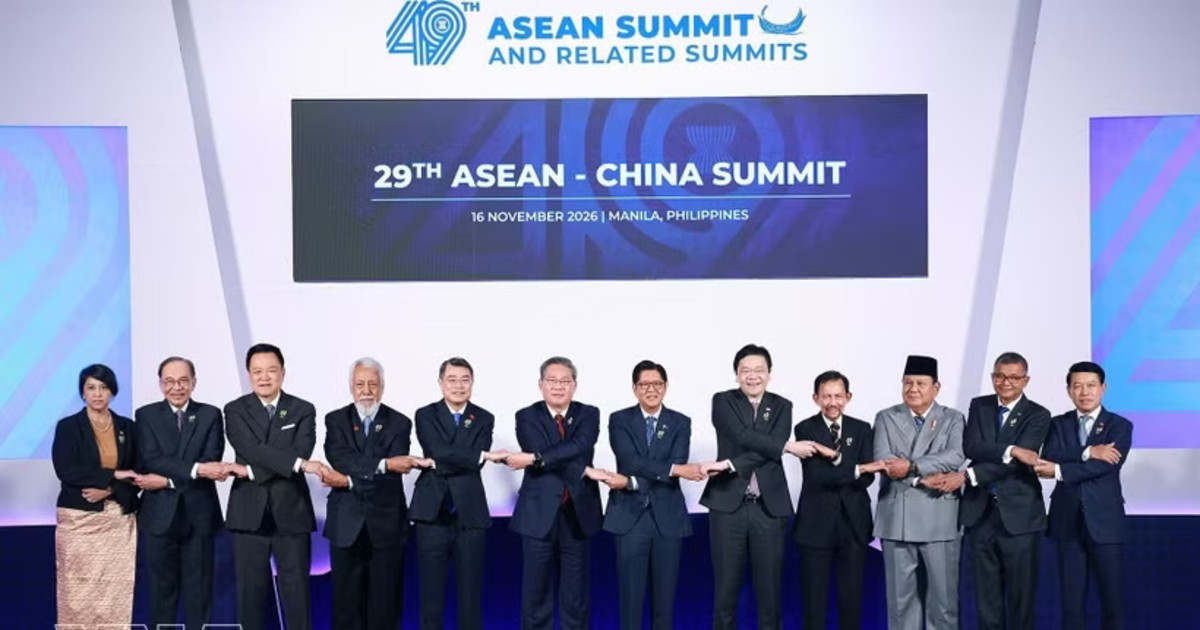
What happened. The 29th ASEAN-China Summit was held in Manila on November 16. In his remarks, Chinese Premier Li Qiang said the two sides had signed the China-ASEAN Free Trade Area 3.0 Upgrade Protocol, laying the institutional groundwork for a vast regional market [1]. The summit announced that the Upgrade Protocol would take effect on December 1, 2026, and designated 2027 as the China-ASEAN Year of AI Cooperation [2]. According to Li, bilateral trade exceeded $1 trillion last year, up 20.1% from 2021; trade grew 29.6% in the first 10 months of this year; and cumulative two-way investment exceeded $500 billion, an increase of more than 50% from five years earlier [1].
Background. Figures from the ASEAN side differ: according to Vietnam Economic Times, ASEAN-China bilateral trade totaled $913.1 billion in 2025, while Chinese direct investment in ASEAN reached $26.24 billion [3]. The substantial gap between the two sets of figures may reflect differences in statistical methodology, so companies should identify their sources when citing them. The summit outcomes listed implementation of the 3.0 Protocol as a priority for economic and trade cooperation, explicitly calling for implementation to move forward after it takes effect in December [3]. Li also said China was willing to use the protocol’s entry into force as an opportunity to deepen industrial and supply chain cooperation and explore alignment with ASEAN’s Digital Economy Framework Agreement [1]. Vietnamese Prime Minister Le Minh Hung proposed prioritizing implementation of the 3.0 Protocol while advancing cross-border railways, smart border checkpoints, cross-border economic cooperation zones, and ASEAN power grid interconnection [3].
Impact. We believe that for Chinese companies setting up factories in Southeast Asia, the entry into force of Version 3.0 marks an update to the rules governing the movement of raw materials, components, and finished goods within the region. Factory location and sourcing decisions can factor in regional supply chains as a whole, rather than simply comparing tax rates in individual countries. For companies developing sales channels and expanding into new markets, the Year of AI Cooperation and efforts to align with digital economy agreements signal potential for more intergovernmental cooperation and coordination on digital services, AI applications, and cross-border data services. The cross-border railways and smart border checkpoints mentioned by Vietnam, meanwhile, directly affect logistics transit times along the China–Vietnam and China–Laos–Thailand corridors.
What remains unclear. Public reporting so far has focused on leaders’ remarks and meeting outcomes. Implementation rules, customs enforcement practices, and transitional arrangements for the protocol’s individual chapters will depend on texts subsequently released by the relevant authorities in each country; detailed analysis of the provisions will be covered in our weekly overseas compliance report. Specific projects, funding, and participation arrangements for the Year of AI Cooperation have yet to be announced.
Top Stories
ASEAN signs Digital Economy Framework Agreement, expected to take effect in early 2027
In our previous issue, we previewed the summit’s expected push for this agreement; this week, it was officially signed. On November 14, ASEAN’s 11 member states signed the ASEAN Digital Economy Framework Agreement (DEFA) during the ASEAN Economic Community Council meeting in Manila [5]. The agreement covers digital trade, cross-border e-commerce, electronic payments, and digital identity. It also seeks to facilitate cross-border data flows while protecting personal information and to strengthen cooperation against online scams and cyber threats [4]. Philippine Trade and Industry Secretary Roque said the agreement could help double ASEAN’s digital economy to $2 trillion by 2030 [4]. The agreement is expected to take effect in early 2027 [5]. Indonesia’s Coordinating Minister for Economic Affairs Airlangga said Indonesia would accelerate ratification, prepare domestic regulations, and identify provisions that need to be amended [5]. Why it matters: For Chinese companies operating cross-border e-commerce, payments, and SaaS businesses in Southeast Asia, this establishes a region-wide framework for digital economy rules. Until individual countries complete ratification and legislative amendments, however, day-to-day operations remain subject to each country’s existing regulations.
Li Qiang’s Thailand visit yields eight cooperation documents; Chinese firms lead in investment applications in Thailand
On November 13, Li Qiang and Thai Prime Minister Anutin witnessed the signing and exchange of eight cooperation documents at Government House in Bangkok. One covers cooperation on electric vehicles, advanced automotive technology, battery manufacturing and recycling, and automotive supply chains [7]. At a China–Thailand business roundtable on November 14, Anutin said Chinese companies had submitted nearly 500 investment promotion applications in the first nine months of the year—more than any other country and accounting for over one-third of all foreign investment projects [6]. He said the government would use the Thailand Board of Investment’s (BOI) Thailand FastPass mechanism to coordinate approvals for large projects and advance “Super License” legislation to help qualifying investments begin operations sooner [6]. The first phase of the Thailand–China high-speed railway remains targeted for completion and opening in 2030 [6]. Why it matters: Chinese firms’ lead in investment applications in Thailand also signals intensifying competition within the same industrial parks and for the same suppliers. New entrants can explore expedited approval channels such as FastPass and assess their projects’ eligibility early.
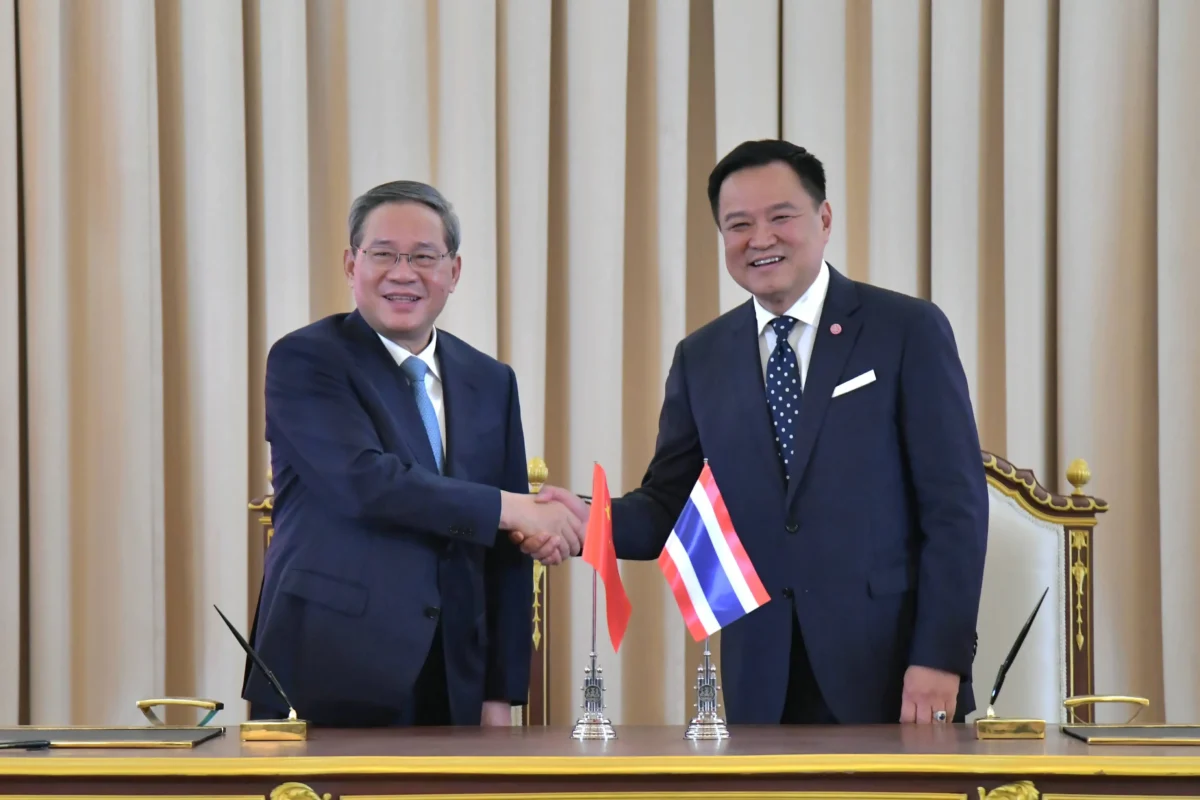
Photo: Chinese Premier Li Qiang (L) shakes hands with Thai Prime Minister Anutin Charnvirakul at Government House in Bangkok on Nov. 13, 2026. Courtesy of the Royal Thai Government (Source: NTD)
U.S.–Thailand Reciprocal Trade Talks Substantially Concluded; Cooperation Provisions Address Transshipment to Evade Tariffs
On November 17, U.S. President Trump and Thai Prime Minister Anutin signed a joint statement in Manila confirming that negotiations on a reciprocal trade agreement between the two countries had substantially concluded, although the final agreement has not yet been signed or entered into force [7]. Under the previously announced framework, economic security provisions require the two countries to cooperate on export controls, investment security, and preventing companies from evading tariffs through transshipment via third countries [7]. The Thai government said on November 16 that existing tariff measures would remain unchanged until the final agreement is signed [7]. Why it matters: Chinese companies with factories in Thailand that primarily export to the United States may face stricter rules-of-origin verification and transshipment scrutiny. Before the agreement is signed, they should review their local value-added shares, supply chain sourcing, and customs documentation.
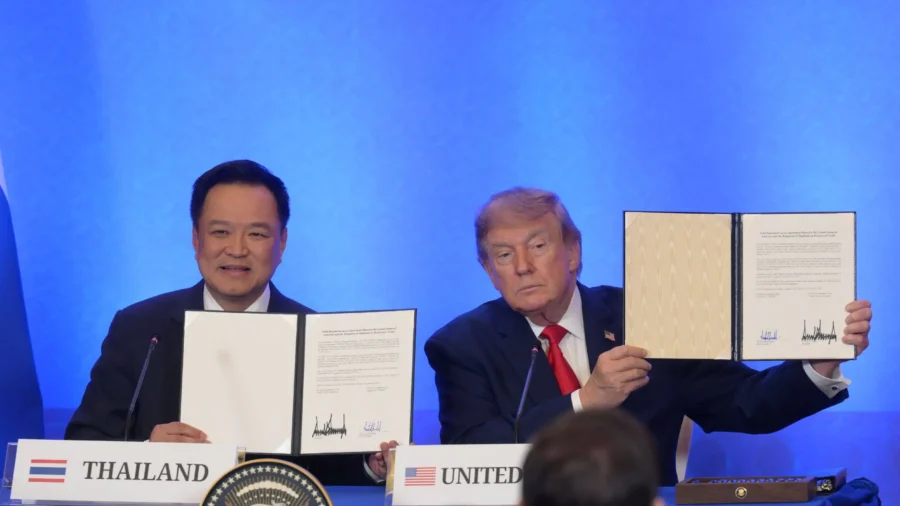
Photo: U.S. President Donald Trump and Thai Prime Minister Anutin Charnvirakul attend a ceremony for the signing of a joint statement on a proposed reciprocal trade agreement at Solaire Resort in Manila, Philippines, on Nov. 17, 2026. (Courtesy of the Royal Thai Government) (Source: NTD)
Indonesia issues 2027 minimum wage calculation guidelines, effective January 1
Indonesian Manpower Minister Yassierli issued guidelines for calculating the 2027 minimum wage to provincial governors in a ministerial letter dated November 16 [8]. Provincial, regency and municipal minimum wages, as well as sectoral minimum wages, will take effect on January 1, 2027 [8]. Why it matters: Indonesia is a major destination for Chinese manufacturing investment in ASEAN. Labor cost budgets for next year will need to be updated promptly once local authorities announce specific figures, with labor-intensive factories paying particular attention to sectoral minimum wages.
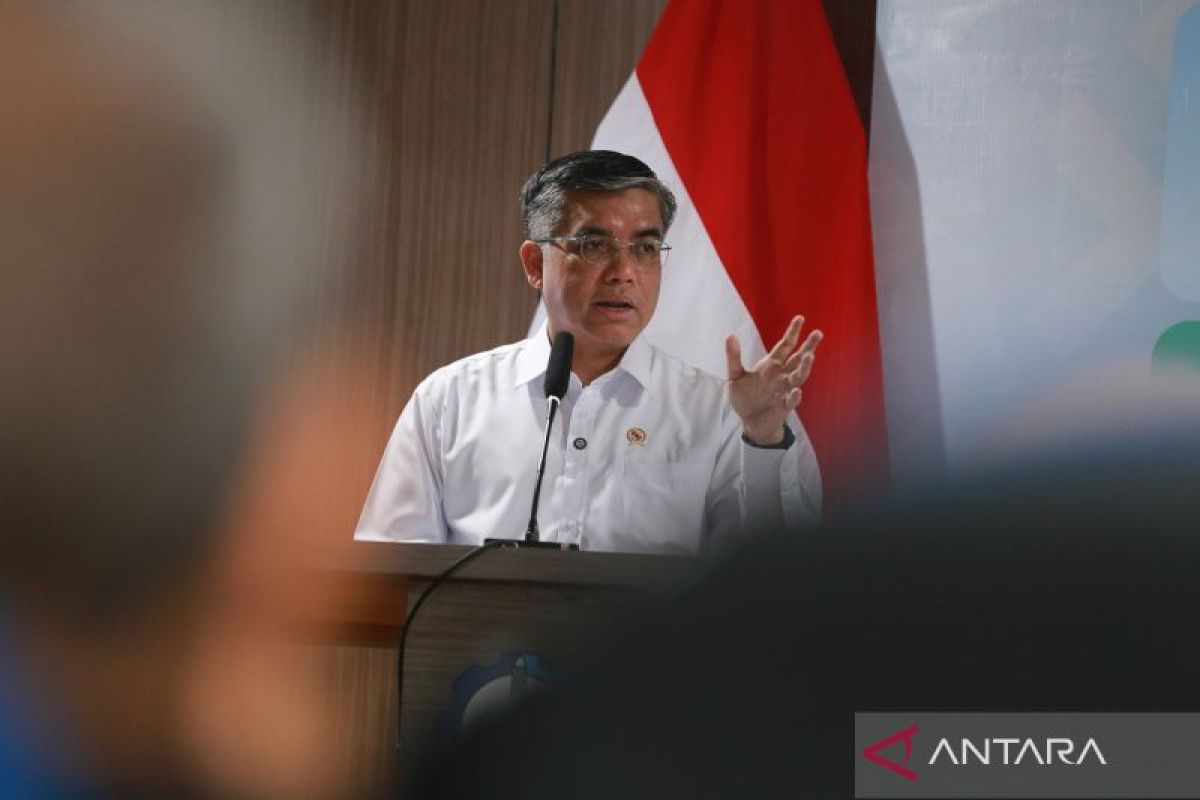
Photo: Manpower Minister Yassierli. /ANTARA FOTO/Moch Asim/agr. (Source: ANTARA News)
By the Numbers
- 29.6%: Growth in China–ASEAN trade in the first 10 months of this year [1]
- $500 billion: Cumulative two-way investment between China and ASEAN [1]
- Nearly 500: Investment promotion applications submitted by Chinese companies in Thailand in the first nine months of this year [6]
- $2 trillion: Target size of the digital economy by 2030 under the ASEAN Digital Economy Framework Agreement [4]
- 6.00%: Bank Indonesia's benchmark interest rate following its November rate hike [10]
News Briefs
- Bank Indonesia: At its November 17–18 Board of Governors meeting, the central bank raised its benchmark interest rate by 25 basis points to 6.00%, with deposit facility and lending facility rates rising to 5.25% and 6.75%, respectively [10]
- Indonesian rupiah: The currency stood at 18,245 rupiah per US dollar on November 17, down 0.66% from the end of October; the central bank said its hedging incentive policy had generated approximately $14.1 billion in transactions since June [9]
- Singapore: The managing director of the Monetary Authority of Singapore warned that AI agents can move funds more quickly, and that financial institutions should consider limits on agent-initiated transactions to manage liquidity risk [11]
- Malaysia: The Consumer Price Index rose 1.9% in October, slightly below market expectations of 2% [11]
- Cambodia: Bilateral trade between Cambodia and Singapore reached $1.95 billion from January through October this year, up 118.7% year over year [11]
Editor’s Take
Notably, several developments this week centered on rules: a date was set for the entry into force of the ASEAN–China Free Trade Area 3.0 upgrade, ASEAN secured a region-wide digital economy agreement, and the U.S.–Thailand trade agreement included anti-transshipment provisions in its cooperation terms [2][5][7]. In our view, Southeast Asia is offering Chinese businesses both greater regulatory advantages and tighter regulatory constraints: institutional frameworks for regional supply chains and digital trade are becoming more comprehensive, while the U.S. market is stepping up scrutiny of origin and transshipment. For businesses expanding overseas, a practical approach is to assess “where to sell” separately from “where to produce”: production capacity serving ASEAN and Chinese markets can make greater use of regional rules, while capacity serving the U.S. market needs robust local value addition and supply chain traceability. Meanwhile, Indonesia’s interest rate hike and next year’s wage adjustments are reminders that financing and labor costs are also changing [8][10].
What to Watch Next
- December 1: The protocol to upgrade the ASEAN–China Free Trade Area to Version 3.0 enters into force [2]
- January 1, 2027: Indonesia’s 2027 minimum wages across all categories take effect [8]
References
- Full Text: Remarks by Chinese Premier Li Qiang at the 29th China-ASEAN Summit — Xinhua, accessed on 2026-11-20
- Chinese premier urges China, ASEAN to stand united, overcome distractions — China.org.cn (Xinhua), accessed on 2026-11-20
- ASEAN-China Summit held in Manila — VnEconomy, accessed on 2026-11-20
- Asean ministers sign landmark digital economy pact — The Manila Times, accessed on 2026-11-20
- ASEAN signs digital economy pact to boost cross-border trade — The Jakarta Post, accessed on 2026-11-20
- Anutin and Li lead Thai–China investment talks on trade upgrade and 2030 high-speed rail target — The Nation Thailand, accessed on 2026-11-20
- US, Thailand Advance Trade Pact Days After Bangkok Deepens China Ties — NTD, accessed on 2026-11-20
- Minister: Minimum wage to weigh living needs-economic state — ANTARA News, accessed on 2026-11-20
- Bank Indonesia reports strong hedging, resilient reserves — ANTARA News, accessed on 2026-11-20
- Bank Indonesia Hikes Interest Rate to 6% in November 2026 to Curb Rupiah Depreciation — Databoks (Katadata), accessed on 2026-11-20
- ASEAN Business and Finance / ASEAN News Brief: November 19, 2026 — Central News Agency, accessed on 2026-11-20