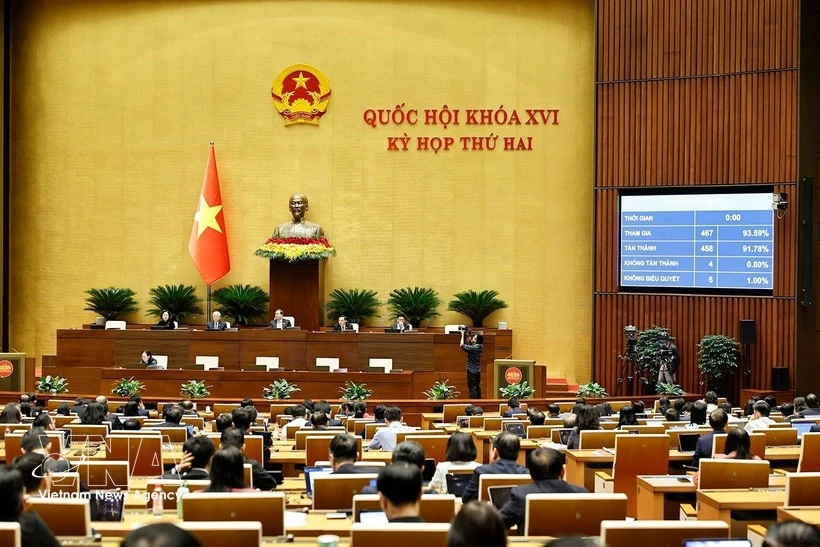

This week, financial flows between Indonesia and China gained a new “direct connection”: Indonesia’s renminbi clearing bank officially launched operations. In the same week, the rupiah approached a record low and Vice President Gibran resigned, prompting Chinese companies operating in Indonesia to reassess their settlement and funding arrangements amid currency and political uncertainty.
This Week’s Top Story: Bank of China Becomes Indonesia’s Renminbi Clearing Bank, Enabling Direct RMB Settlement Between China and Indonesia
The clearing bank provides renminbi liquidity, clearing and settlement services, and renminbi deposit and financing instruments. On launch day, it also signed cooperation commitments with 12 Appointed Cross Currency Dealer (ACCD) banks—banks authorized to quote direct exchange rates between the rupiah and renminbi. These include Bank Mandiri, Bank Negara Indonesia, Bank Rakyat Indonesia, Bank Central Asia, China Construction Bank Indonesia, and ICBC Indonesia [1][3].
Background. Xinhua quoted Zhou Kan, chargé d’affaires at the Chinese Embassy in Indonesia, as saying that China has been Indonesia’s largest trading partner for 13 consecutive years and one of its top three sources of foreign investment for 10 consecutive years [2]. Indonesia’s rationale is also clear: Coordinating Minister for Economic Affairs Airlangga said that Indonesia still runs a trade deficit with China and hopes to boost exports to China by expanding local-currency settlement [1].
Impact. For Chinese companies operating in Indonesia, the most immediate change is the ability to bypass an intermediate conversion into US dollars when exchanging renminbi and rupiah. Bank Indonesia Governor Destry said businesses can now settle trade with China directly in renminbi, helping reduce reliance on third-party currencies [2]. With the rupiah under pressure, Chinese-owned factories and trading companies importing raw materials and equipment can consider denominating some payments and receivables in renminbi to reduce double-conversion costs and exposure to US dollar volatility. Bank Indonesia is also advancing this initiative across monetary operations, market development, and international cooperation, with the aim of expanding hedging instruments [3].
What Remains Unclear. The announcements have not disclosed spreads for direct renminbi–rupiah quotes, or the financing rates and limits the clearing bank can offer. The pricing businesses actually receive will depend on quotes from individual ACCD banks. It will also take several months of actual trading to assess the depth of liquidity in renminbi assets in Indonesia and whether offshore renminbi financing is cheaper than US dollar financing.

Image: Photo of the renminbi clearing bank launch event released by Bank Indonesia (Source: Bank Indonesia)
Key News
Rupiah Falls Near Record Low as Expectations of a Fed Rate Hike Rise
According to KabarBursa, the Indonesian rupiah fell 0.5% intraday against the US dollar to 18,145 on November 11, just 44 points shy of its record low of 18,189 [4]. The trigger was higher-than-expected US inflation in October: CME Group’s FedWatch tool showed that market expectations for a Federal Reserve rate hike in December had risen to 87%, up from 77% five days earlier [4]. Bank Indonesia previously reported that foreign exchange reserves stood at $146.3 billion at the end of September, enough to cover 5.3 months of imports [4]. Why it matters: Every decline in the rupiah squeezes margins for Chinese companies that import raw materials priced in US dollars but collect payments in rupiah. Foreign exchange reserves remain adequate, but short-term exchange rate volatility is still a significant risk, making advance hedging arrangements essential.
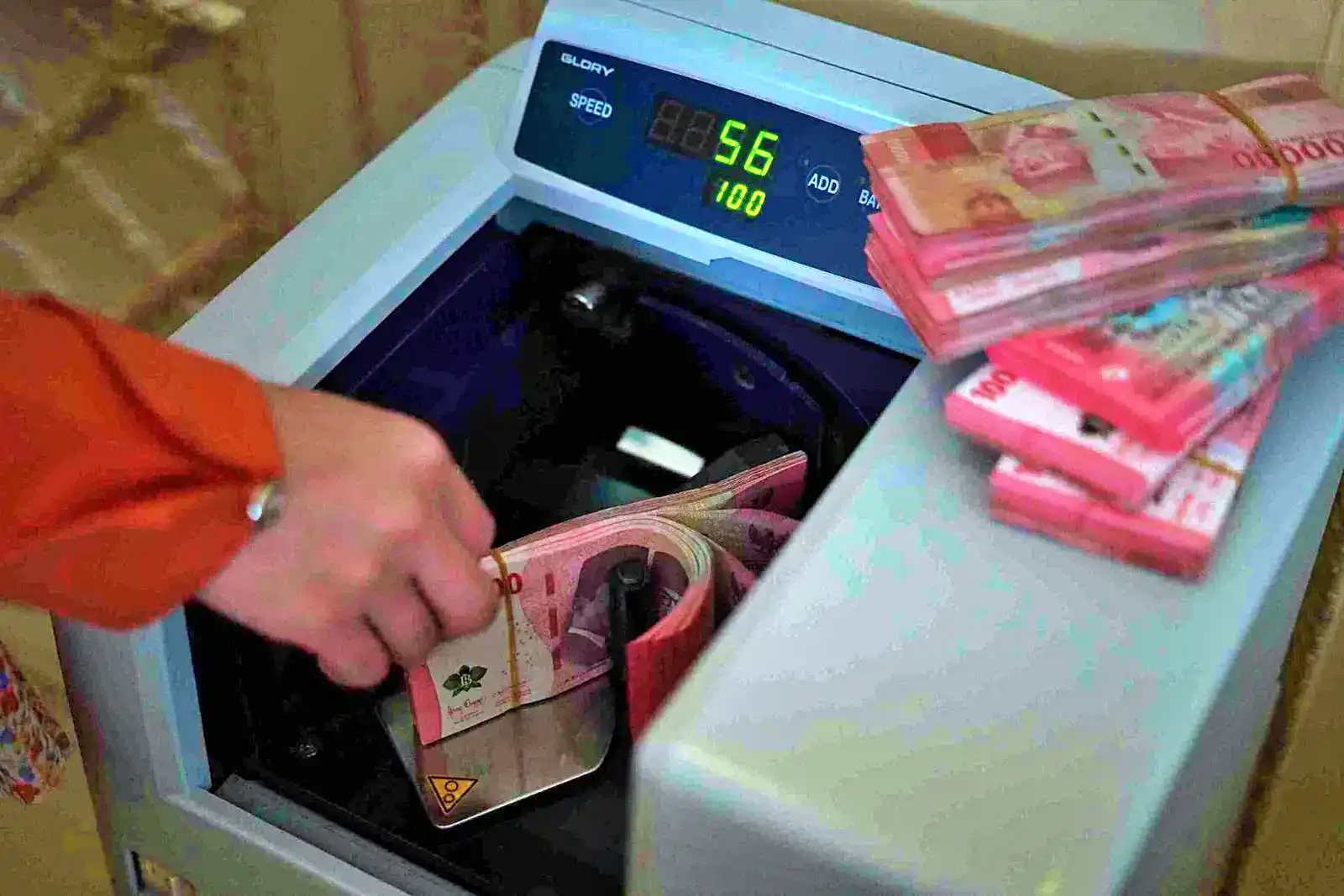
Image: Illustration accompanying KabarBursa’s report on the rupiah falling to 18,145, nearing its record low (Source: KabarBursa.com)
Vice President Gibran Resigns, Leaving Prabowo to Rebalance the Ruling Coalition
Why it matters: A change in vice president does not directly alter economic policy, but the successor’s party affiliation will affect coalition dynamics and policy continuity. With both the currency and capital markets under pressure, political uncertainty will make foreign investors more inclined to wait and see.

Image: Gibran Rakabuming Raka has stepped down. (Reuters: Willy Kurniawan) (Source: ABC News)
Google and Others Report: Indonesia’s Digital Economy Grows 16% This Year, with E-Commerce Accounting for $85 Billion
The report notes that this growth comes amid economic and regulatory headwinds, as platforms compete for increasingly price-conscious consumers [6]. Why it matters: For Chinese companies building local consumer brands and supply chains in Indonesia, the market is still expanding, but profit margins are narrowing. Year-end sales events are becoming more of an opportunity to maintain sales volume than to turn a profit.

Photo: A consumer uses electronic devices to shop online on Oct. 13, at a marketplace in Semarang, Central Java. (Antara/Aprillio Akbar) (Source: The Jakarta Post)
Consumer Confidence Rises to 119.9 as Retail Sales Recover Modestly
However, the same survey also indicates that retailers surveyed expect inflationary pressures to rise in December and March of next year [8]. Why it matters: Confidence is recovering, but consumers remain cautious about spending. With inflation expectations also rising, Chinese companies targeting Indonesia’s mass market need to leave room in their pricing for higher costs.
Key Figures
- 18,145 Indonesian rupiah per US dollar: Intraday level on November 11, just 44 points from the record low of 18,189 [4]
- $43.89 billion: Value of local-currency settlement transactions between Indonesia and China from January through September 2026 [1]
- 83.49%: China’s share of Indonesia’s total local-currency settlement volume [1]
- 119.9: Indonesia’s consumer confidence index for October [7]
- $85 billion: Projected e-commerce GMV in Indonesia for 2026 [6]
News Briefs
- MSCI: The November index review removes Barito Pacific (BRPT) and Bumi Resources Minerals (BRMS) from the Global Standard Indexes, effective after the market close on November 30 [10]
- Panda Bonds: Following its debut RMB 7 billion panda bond issuance in July, Indonesia issued another RMB 10 billion in November [1]
Editor’s Take
The launch of a renminbi clearing bank and the renewal of a local-currency settlement framework by the central banks of four ASEAN countries both offer businesses an “alternative route” [1][9]. In our view, for Chinese companies operating in Indonesia, the value of this route lies not in replacing the US dollar entirely, but in better aligning the currencies of costs and revenues. Companies importing from China and selling in Indonesia can start by piloting renminbi settlement for a portion of their import payments while closely monitoring actual quotes from different banks. Capital-flow pressures stemming from political developments and the MSCI review could still trigger exchange-rate swings in the near term.
What to Watch Next
- November 30: MSCI’s November index changes take effect after the market close. Watch the impact of passive foreign fund outflows on the rupiah [10]
- December 10–16: Promotional period for Indonesia’s National Online Shopping Day (December 12), with idEA targeting IDR 40 trillion in transactions [6]
Sources
- RMB Clearing Bank to Strengthen Indonesia’s Economic Resilience — Bank Indonesia, accessed on 2026-11-15
- Indonesia launches Renminbi (RMB) clearing bank — The Star (Xinhua report), accessed on 2026-11-15
- BI Inaugurates Yuan Clearing Bank: What It Means for the Rupiah — CNBC Indonesia, accessed on 2026-11-15
- Rupiah Weakens to 18,145, Nearing All-Time Low Again — KabarBursa.com, accessed on 2026-11-15
- Indonesia Vice-President Gibran Rakabuming Raka resigns over questions about his eligibility — ABC News, accessed on 2026-11-15
- E-commerce drives Indonesia’s 16% digital economy growth — The Jakarta Post, accessed on 2026-11-15
- Consumer Survey October 2026: Consumer Confidence Increasing — Bank Indonesia, accessed on 2026-11-15
- October 2026 Retail Sales Survey: Retail Sales Expected to Increase — Bank Indonesia, accessed on 2026-11-15
- Bank Indonesia, Bank Negara Malaysia, Bank of Thailand, and Bangko Sentral ng Pilipinas Strengthen Cooperation Under the Local Currency Framework — Bank Indonesia, accessed on 2026-11-15
- MSCI Removes BRPT and BRMS from Global Index, Drops 7 Stocks from Small Cap Index — Katadata, accessed on 2026-11-15